

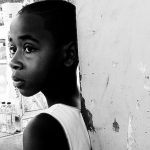
Orphans are children left without adequate familial provision and protection from evil.
James 1:27 Religion that is pure and undefiled before God the Father is this: to visit orphans and widows in their affliction, and to keep oneself unstained from the world.
The Greek word for ‘orphans’ used in James 1:27 is “orphanos.” “Orphanos” is translated as “fatherless” in the King James, American Standard Version, New American Standard Version. Conversely, the English word, “orphan”, is used in the Common English Version, English Standard Version, New King James Version, New Living Translation, and New International Version.
One of the gold standards for interpretation of Biblical Greek is Strong’s Exhaustive Concordance. Strong’s defines “orphanos” as bereaved, parentless, comfortless, and/or fatherless.
Another gold standard in Greek interpretation, Easton’s Bible Dictionary, describes an “orphan” as someone who is “desolate and without protectors, ‘comfortless’, [and] ‘fatherless.’” 6
It is possible that using the word “fatherless” to describe “orphanos” gets us closer to the precise English derivative. Furthermore, in every place that the Hebrew word yatkhom (Strong’s number H3490) is used, the Septuagint uses the same “orphanos” word, and many of these passages commonly translate “orphanos” as “fatherless.”
Experientially this should make sense to us. Fatherless children face intense affliction simply by not having a father figure present. Single mothers have provided a foundation for thriving children in every city in America. Just because it’s normal, though, doesn’t mean it’s that way by design. The Affliction of a child with merely an absent father can range from minor developmental delays to a statistically higher probability that the child will end up in prison.
However, I don’t think “fatherless” captures the whole spectrum of affliction that James is calling us to “visit.” To get a more precise understanding of our calling to visit the orphan in their affliction we must look at the context of two cultures: the cultural context of James’ audience and the cultural context of the Old Testament.
Another gold standard in Greek usage is The New International Dictionary of New Testament Theology. It has this to say about “orphanos” in classic Greek literature:
In secular Gk. orphanos is used from Homer onwards as an adj. meaning without parents, fatherless or more generally, bereaved bereft of; and as a noun, orphan. Careful provision was made in ancient Greece for orphan children. A guardian, usually a near relative, was appointed who was responsible for the orphan’s maintenance and education. Any assets the child inherited were strictly protected until he came of age. Orphans were exempted from the regular taxes. The state undertook the maintenance of the children of soldiers killed in war (Demosthenes). orphanos [sic] is used figuratively of disciples left without a master (e.g. Plato. Phaedo 116a).
Thus, we can see that James’ audience could have definitely understood an “orphanos” as a child who has lost both parents. But, “more generally,” the literary context could have indicated that “orphanos” means a child who is “bereaved and bereft.”
Would James’ immediate hearers have considered a child an “orphanos” whose parents were alive, yet abandoned the child – or were attempting to kill the child? Most likely, “Yes.”
Dr. Aloisi’s historical research indicates that
[a]bortion and exposure were very common in the ancient world (see, e.g.,Oxyrhynchus Papyrus 744). “Prior to the advent of modern medicine, most societies have utilized a form of exposure, and in view of the dangers of abortion, exposing a child was thought of as the best way of saving an infant from a life of impoverishment or disability….Moreover, it was common for children to be exposed in places which enabled their discovery by other adults, who might take them in” (Ray Lawrence, “Childhood in the Roman Empire,” History Today 55). In the ancient world, children who were exposed usually met one of three fates: death, slavery/prostitution, or Christian “‘adoption.”10
Thus, we can conclude that though these children had fathers who may have been alive, their fathers and families were not providing adequate familial provision and protection from evil. The church took upon itself the duty to care for these children. The widows would often comb the streets of Rome looking for these “exposed” children, taking them in until they could find a Christian home to adopt them.
Thus, we can draw from the general sense of “orphanos” in James’ context and the practice of the early church, that an orphan could be a child whose parents are alive yet have abandoned them or are allowing them to die through neglect or are actively trying to kill them.
Let’s take a moment to review the ground we have covered so far. We have included the following groups of children in the spectrum of affliction that the Christian is called to visit: 1) children who have had both parents die, 2) children who lack a permanent father figure, and 3) children whose parents may be alive, but their parents have abandoned them or are actively (or passively) seeking their death.
By way of review, our definition of an orphan is a child left without adequate familial provision and protection from evil. We say “familial” because it is the family unit, and often the father as primary figure in that unit, that provides food, clothing, shelter, and training to the child. It is also this family unit that protects the child from the inertia of evil that prowls like a lion to steal from the orphan, kill the orphan, destroy the orphan, and exploit the orphan for financial gain.
The Septuagint’s usage of “orphanos” also emphasizes the integral role of a father in a child’s life:
In the LXX [Septuagint – Greek translation of the Old Testament] orphanos translates yatom []. In the OT the plight of the orphan, whether or not his mother has died (cf. Job 24:9), is that he has lost his father. Without the father “the father’s house”, the primary unit of family life, ceases to be and the remaining members of the household become vulnerable individuals whose existence is both anomalous and tragic. Thus in many texts the reference is to orphans and widows together (e.g. Deut. 10:18; Ps. 146:9). Because the orphans are so helpless – all they can do is to “wander about and beg” (Ps 109:9, 10) – there can be nothing more wicked than to exploit or ill-use them (Deut. 27:19; Job 6:27; 22:9; 24:3, 9; Ps. 1:23; 10:2; Jer. 5:28; Ezek. 22:7).
The law codes of the OT demand that the rights of orphans be upheld and their needs met. Orphans are to have a share in the special tithe (Deut 14:28, 29; 26:12-15), and are to be included in the annual feasts (Deut. 16:11, 14). The sheaves, the olives and the grapes which remain after the harvest are to be left for “the sojourner, the orphan, and the widow” (Deut. 24:17-22). The repentance and moral renewal called for by the prophets must include care for orphans (Isa. 1:17; Jer. 7:6; 22:3; Zech. 7:10).
Behind this insistence on provision for orphans lies the conviction that it is ultimately Yahweh himself who “executes justice for the fatherless” (Deut. 10:18; cf. Exod. 22:22-24; Prov. 23:10-11; Ps. 146:9; Hos. 14:3). Yahweh himself is “father of the fatherless” (Ps. 68:5; cf. Ps. 10:14).
Concern for orphans is urged upon the group to which the Zadokite Documents are addressed (CD 6:17; 14:14). One of the non-biblical psalms of the Qumran community gives praise to the Lord who has not “forsaken the orphan” (1QH 5:20). yatom [] is here used figuratively to designate the member of the community, persecuted by the ungodly but under the care of God. The image of the orphan as a collective symbol of the people of God is used by Philo. “The whole Jewish race is in the position of an orphan. . . . Nevertheless the orphan-like desolate state of his people is always an object of pity and compassion to the Ruler of the Universe” (Spec.Leg. 4, 176-179)
Later Judaism continued to safeguard the rights of orphans, to legislate for their welfare, and to regard the care of them as meritorious. Until an orphan boy or girl marries he or she is to be maintained from the charity funds (Ket. 67a, b). Deserving of special praise and reward is the one who cares for the orphan in his home; “Whoever brings up an orphan in his own home, scripture ascribes it to him as though he had begotten him” (San. 19b; cf. Ket. 50a). A late Midrash can speak of the care of orphans as one of the “gates of the Lord” through which the righteous enter the future world (Midrash Ps. 118:19).15
The New and Old Testament usage give strong support to categorizing children without a father as orphans within the meaning of James 1:27.
What we can conclude from this analysis is remarkable. For over 1,500 years, 40 different authors, in three different languages, across varying geopolitical contexts have concurred that a fatherless child holds a special status in relation to God’s people.
In addition, from a general and more subtle sense of the word we can deduce that even children whose parents are alive may be considered “orphanos” when these parents abandon their children. Dr. Aloisi’s research supports this premise when he points out the practice of the early church:
When we first meet the mention of the adoption and bringing up of foundlings, this work appears not as a novelty, but as one long practiced. It is true that the heathen also used to take care of exposed children, but for the purposes of bringing them up as gladiators or prostitutes, or to use them in their own service…. Christians brought up the children whom they took charge of for the Lord, and for a respectable and industrious life (G. Uhlhorn, Christian Charity in the Ancient Church, p. 186).16
By way of conclusion, an orphan is a child left without adequate familial provision and protection from evil. We say “familial” because it is the family unit, and often the father as primary figure in that unit, that provides food, clothing, shelter, and training to the child. It is also this family unit that protects the child from the inertia of evil that prowls like a lion to steal from the orphan, kill the orphan, destroy the orphan, and exploit the orphan for financial gain.
*Adopted from The End of Orphan Care, Samuel J. McLure
 Supreme Court Overturns Bad Precedent in Ex Parte C.D. – March 27.2026
